
You’ve logged hundreds of hours in Hogwarts Legacy, defeated the main antagonist, and cleared most quests. But before you shelve the game, there’s a layer of depth waiting, the finishing touches that separate a good playthrough from a complete one. Whether you’re hunting the last collectible, perfecting your spellcasting loadout, or unlocking secrets tucked away in forgotten corners, these final details transform your experience from “I beat the game” to “I’ve truly mastered Hogwarts Legacy.”
The finishing touches in Hogwarts Legacy aren’t mandatory, but they’re the difference between watching the credits roll and genuinely owning your time in the wizarding world. You’ll earn achievements, optimize gear that actually matters, build relationships that feel rewarding, and discover areas that reward curiosity. This guide walks you through the specifics, exact locations, step-by-step strategies, and the mechanics that make it all click.
Table of Contents
ToggleKey Takeaways
- Hogwarts Legacy finishing touches include collectibles, relationship quests, gear optimization, and skill progression that transform a completed playthrough into a fully realized experience with tangible gameplay benefits.
- Merlin Trials (95 total) reward bonus Talent Points that unlock build flexibility, with completionists earning 95 extra points compared to casual players’ 38 points for character specialization options.
- Legendary gear farming from high-level enemies and endgame dungeons provides five-perk equipment with exclusive bonuses like Nullifying Curse and Curse Breaker that directly enhance combat effectiveness.
- Perfecting your spell loadout with synergistic combinations—such as pairing Incendio’s Burning effect with heavy-hitting spells—creates combat efficiency that matches your chosen specialization (Duelist, Auror, Magizoologist, or Seeker).
- Companion relationship milestones, mentorship quests with Professors, and friend interactions unlock narrative depth, cosmetic rewards, and sometimes exclusive spell access tied to your dialogue choices throughout the game.
- Room of Requirement upgrades and hybrid plant breeding enable parallel potion crafting and resource production that provide tangible advantages in endgame content without forcing mandatory item usage.
Understanding Finishing Touches In Hogwarts Legacy
Finishing touches in Hogwarts Legacy refer to the secondary content that completes your character’s journey beyond the main story. These include collectibles, optional quests, relationship milestones, gear optimization, and skill progression that add polish to your save file.
The game’s structure rewards completionists. Unlike some titles that lock endgame content behind difficulty walls, Hogwarts Legacy gives you everything post-game as long as you pursue it. You can tackle finishing touches at your own pace, no level scaling punishes you for taking your time.
What makes finishing touches meaningful is that they’re tied to tangible progression. Finding all Merlin Trials unlocks a specific upgrade. Maxing out relationship quests grants unique dialogue and interactions. Farming legendary gear directly affects your combat effectiveness. These aren’t cosmetic badges: they’re genuine gameplay enhancements that feel earned.
Collection Quests And Challenges You Shouldn’t Miss
Field Guide Pages And Collectibles
Field Guide pages are scattered across Hogwarts and the Highlands. There are 112 pages total, each area has specific pages that populate once you’re close enough. The pages themselves don’t grant combat bonuses, but finding them all unlocks an achievement and fills your Field Guide, which serves as both a tracker and a lore compendium.
The grind feels natural because pages align with exploration. You’ll find them while routing to other objectives. Mark areas methodically, start with one region, clear every page, then move to the next. Use your revealer spell to uncover page locations once you’re in their vicinity. Completing regions in order (Highlands first, then Hogsmeade, then the castle) keeps progress visible and prevents backtracking.
Collectibles include Demiguise Statues (16 total), Shiny Collectibles, Relationship chests, and Loot chests. Demiguise Statues are your priority, each grants an extra Demiguise Moon, which you can trade for spell upgrades in the Room of Requirement. A single Moon purchase could be the difference between one-shotting an enemy or taking an extra turn.
Merlin Trials And Secrets Of The Realm
Merlin Trials are scattered puzzles that reward Talent Points when completed. There are 95 Trials in total, completing them all grants you 95 bonus points to allocate beyond your standard progression.
Trials fall into five categories: Bomb Trials (hit exploding objects), Puzzle Trials (solve environmental challenges), Combat Trials (defeat waves of enemies), Pressure Plate Trials (activate ground switches), and Collection Trials (gather items). Each type has a specific mechanic, and difficulty scales slightly with region.
Completion rates matter. The more Trials you finish, the more flexible your build becomes. A casual player might have 38 Talent Points to spend: a completionist has 130. That’s the difference between filling out an entire magical specialization or locking yourself into one playstyle. Trials are intentionally scattered to encourage exploration, they’re your reward for veering off the main path.
Secrets of the Realm are unmarked treasure chests hidden in obscure locations. These often require solving environmental puzzles or navigating tricky platforming sections. Unlike Field Guide pages, Secrets have no tracker, you’ll stumble upon them or miss them entirely. The payoff is legendary gear, Galleons, and occasionally rare crafting materials.
Relationship And Ally Quests For Character Completion
Companion Relationship Milestones
Key relationships in Hogwarts Legacy include Sebastian, Ominis, Poppy, Natsai, and Delaney. Each character has a relationship progression tied to quests and ambient dialogue choices. Maxing out relationships unlocks special dialogue, cosmetic rewards, and sometimes exclusive spell access.
Sebastian’s questline is the most complex. Your choices about Dark Magic influence his trajectory. Encouraging him toward darkness unlocks different dialogue and moral branching points. Conversely, steering him toward redemption opens other avenues. Neither choice locks you out of his final quests, but the tone shifts significantly. The payoff isn’t mechanical, it’s narrative depth.
Ominis and Poppy offer straightforward questlines focused on their personal growth. Completing their full arcs unlocks achievement progress and cosmetic rewards like new clothing patterns or house decorations.
Relationship quests differ from main story quests. They’re paced slower and often branch into unexpected directions. A single quest with Sebastian might unlock three follow-ups. Paying attention to character dialogue hints at unlocking new quests, the game doesn’t force-feed them to you.
Friendship And Mentorship Quests
Mentorship quests are one-on-one sessions with Professors, Horace (Potions), Sharp (Herbology), Vector (Divination), Gesundheit (Flying), and others. These grant skill XP and relationship progression with each Professor.
Potions Mentorship teaches you brewing techniques and reagent properties. Completing the full chain unlocks the ability to craft better potions independently. Herbology Mentorship focuses on plant identification and growth cycles, useful for your Room of Requirement plants. Divination feels more abstract but rewards with Prediction talent and future-sight mechanics.
Friendship quests emerge organically. Characters ask you to complete tasks, investigate mysteries, or attend social events. These feel less like obligations and more like genuine interactions. A Ravenclaw might ask you to help solve a riddle: a Gryffindor might challenge you to a duel.
The distinction matters: mentorship is structured and gains-focused: friendship is organic and narrative-focused. Both matter for 100% completion, but friendship quests are where the game’s character writing shines.
Gear Optimization And Spell Loadout Perfection
Legendary Gear Farming Strategies
Legendary gear in Hogwarts Legacy appears with five perk slots instead of the typical three. Two of those slots are always legendary-exclusive perks that grant unique bonuses, Nullifying Curse (reduces cooldowns), Curse Breaker (boosts damage after dodging), Focused Casting (increases spell damage), or others.
Legendary gear doesn’t come from main quests: it drops exclusively from high-level enemies (Executors, Inferius, Ashwinder Executors, Dark Trolls) and endgame dungeons. Farming efficiently means targeting specific locations with consistent spawns.
Best farming locations:
- Poacher’s Encampment (Highlands): Consistantly spawns Ashwinders and Mergrims. Takes 3-5 minutes per run.
- Feldcroft Catacomb: Dark wizards spawn reliably. Short dungeon, quick clear.
- Coastal Cave: Larger enemy variety. Longer but rewarding.
Gear rarity follows a weighted system. Legendary drops are rarer than Epic, which are rarer than Rare. Your spell damage stat and gear level affect what rolls you see. A level 40 character sees better rolls than level 20, even in the same location.
Pro tip: Farm with a loadout designed for speed, not survival. Spells like Bombarda and Incendio clear crowds quickly. Pack a ranged damage spell like Diffindo and a utility spell for crowd control. Your goal is running through 10 quick encounters, not optimizing for one perfect duel.
Building Your Ultimate Spell Combination
Spell selection is the backbone of Hogwarts Legacy combat. Your loadout of four equipped spells (plus four quickcast slots) determines your effectiveness against different enemy types.
Meta loadout for endgame:
Offensive Core:
- Bombarda (AoE primary damage): Deals massive damage to groups. Upgrades to Bombarda Maxima for increased blast radius.
- Incendio (status effect setup): Applies Burning. Enemies take increased damage while burning, a force multiplier for other spells.
- Diffindo (ranged single-target): Fast cast time, reliable damage. Use against flying enemies or to finish stunned targets.
Utility/Control:
- Crucio or Avada Kedavra (if you’ve invested in Dark Magic): One-shot potential against high-health enemies. Risky but rewarding.
- Stupefy (stun lock): Interrupts enemy attacks. Mandatory against Executors and bosses.
- Protego (shield): Reduces incoming damage. Necessary for solo playstyles.
Spell slots are limited, so prioritize synergy. Incendio’s Burning effect pairs with any heavy-hitting spell. Bombarda’s AoE covers multiple enemies, making it efficient for crowd control.
Talent tree context: Your selected specialization (Duelist, Auror, Magizoologist, Seeker) modifies spell effectiveness. A Duelist gets passive damage boosts to single-target spells: an Auror gets cooldown reductions. Your spell loadout should match your specialization, not fight it.
Optimizing gear alongside spells means farming perks that boost your chosen spells. If you’re running Incendio, farm for Inferno Force (increases Fire spell damage) or Concentrated Casting (boosts spell damage when you’ve cast multiple of the same spell type).
House Points And Reputation Milestones
Maximizing House Points Before Year Four
House Points determine your House placement at the end of each year. While they don’t affect gameplay directly, they unlock cosmetic rewards and contribute to achievement progress.
You earn House Points through:
- Classroom Activities (+10 points per answer): Answer questions correctly during lessons with your chosen house. This is the fastest path to points.
- Quests (+5-50 points depending on quest type): Main quests award more points than side quests.
- Duels (+5 points per win): Duel other students. Unranked practice duels against your own house count.
- Secrets of the Realm (+20 points): Discovering hidden chests grants a one-time bonus.
Maxing House Points before Year Four is simple: attend every classroom activity you can and answer strategically. The game gives you hints during lessons, pay attention to dialogue preceding the question, and the answer becomes obvious.
Tactical consideration: You can’t change your house after selection, so commit early. Slytherin classrooms have Dark Magic questions. Ravenclaw focuses on logic puzzles. Hufflepuff emphasizes care for creatures. Gryffindor centers on bravery. Your chosen house determines which professor you study with, which affects available Dark Magic options.
Earning Respect From Rival Houses
Rival house students include specific characters from Slytherin, Gryffindor, Ravenclaw, and Hufflepuff (depending on your house). Building respect with rivals unlocks optional quests and changes how they interact with you.
Respect comes from:
- Dueling and winning: Defeating rival students in duels grants immediate respect.
- Quest completion: Helping rivals with their personal quests deepens relationships.
- Ambient dialogue choices: How you talk to rivals during random encounters affects their opinion of you.
Respect unlocks rival house quests that run parallel to main story progression. A Slytherin rival might ask you to gather potion ingredients. A Gryffindor might challenge you to increasingly difficult duels. These aren’t mandatory, but they add flavor to your experience.
Notably, respect is separate from House Points. You can have high House Points for your own house while simultaneously building respect with rivals. They’re complementary progression systems, not competing ones.
Mastery Abilities And Skill Tree Completion
Essential Talents To Unlock
Talent trees branch into three main categories: Spell Knowledge, Talents (passive bonuses), and Specializations (active ability lines).
Critical path talents that unlock immediately:
- Revealer (Spell Knowledge): Required for finding collectibles. Unlock this early.
- Dark Magic talents (if pursuing that tree): Crucio and Avada Kedavra are locked behind Dark Magic talent progression. You can’t use them without investing in this tree.
- Beast Mastery talents: Unlock the ability to control beasts in combat. Synergizes with the Magizoologist specialization.
You earn Talent Points from:
- Main story progression (automatic milestones)
- Merlin Trials (95 total points available)
- Level-ups (one point per level, up to level 40)
Practical allocation: Don’t spread yourself too thin. A focused build with 80% of talents maxed is stronger than a generalist with 30% coverage across everything. Commit to either Dark Magic or Light Magic, not both. Your specialization choice should drive your talent investments.
Combat And Magical Specializations
Four specializations offer distinct playstyles:
Duelist: Focused on single-target spell damage. Passive bonuses increase damage against one enemy at a time. Best for boss fights and high-priority targets. Primary spells: Diffindo, Crucio, Avada Kedavra.
Auror: Balanced offense and defense. Cooldown reduction on spells, passive damage boost. Versatile for varied content. Works with almost any spell loadout.
Magizoologist: Beast-focused playstyle. Control beasts in combat, summon creatures to aid you. Active ability summons a powerful companion. Requires investment in Beast Mastery talents.
Seeker: Exploration and utility focused. Reveals collectibles, increases item find rate, unlocks secret areas. Less combat-oriented, better for puzzle solvers than dungeon delvers.
Choosing a specialization locks you into an active ability tree. You can’t switch mid-combat, but you can respec talents at the Room of Requirement. That said, respeccing costs Galleons, so avoid frivolous changes.
The meta has shifted since launch patches. Early guides recommended Duelist as the “strongest,” but balance updates have made all specializations viable. Pick the one that matches your playstyle. A player who loves crowd control benefits more from Magizoologist than a pure damage-focused Duelist.
Hidden Locations And Secrets Worth Finding
Hogwarts Castle and the Highlands conceal dozens of unmarked locations. These areas don’t appear on your map initially, you discover them by exploring thoroughly or following environmental clues.
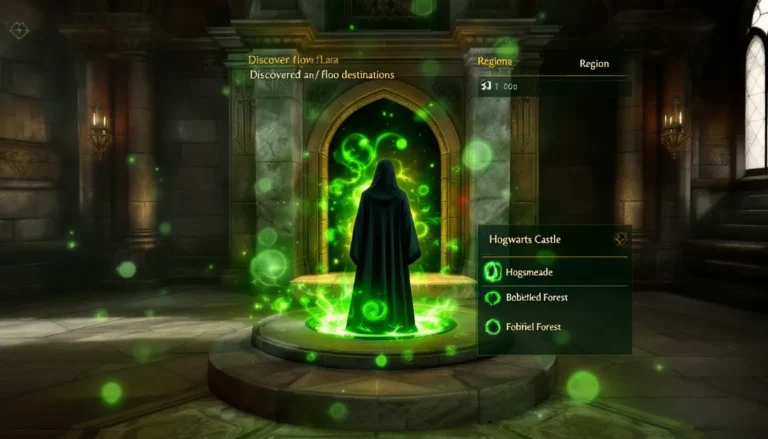
Floo Flame shortcut locations scatter throughout the castle. Once activated, they become fast-travel points. Some are tucked in dead-end corridors or hidden behind destructible walls. Activating all Floo Flames cuts travel time dramatically, especially when rushing between the castle and the map’s edges.
Secret rooms in the castle include hidden chambers with loot chests, potion ingredients, and occasionally rare gear. One notable secret room requires solving a specific puzzle sequence using revealer spells. Another is accessible only after progressing a companion’s questline.
The Merlin Trials scattered across both regions aren’t always obvious. Some are marked by stones or magical markers. Others blend into the environment, you’ll walk past them dozens of times before noticing. Methodically sweeping areas ensures you don’t miss them.
Legendary beasts roam the Highlands in unmarked locations. These high-health enemies drop legendary gear when defeated but are genuinely dangerous. A level 30 player should avoid them: a level 35+ can take them down. These battles feel like proper boss encounters, not standard enemy fights.
Exploration philosophy in Hogwarts Legacy rewards curiosity. The game doesn’t flag everything that matters. This encourages replaying areas with fresh eyes, noticing details you initially missed. Unlike some modern games that over-explain everything through quest markers, Hogwarts Legacy trusts players to hunt. That’s a strength worth respecting.
Resources like comprehensive walkthroughs help identify specific secrets if you’re stuck, but the first pass should be personal exploration. The discovery experience matters more than immediate completion.
Room Of Requirement Final Touches
Decorations And Unlockable Upgrades
The Room of Requirement is your personal sanctuary, you decorate it, grow plants, brew potions, and craft gear. Unlike the castle, the Room is entirely yours to customize.
Decorations unlock through progression:
- Furniture sets require Galleons and specific materials. A cozy bedroom requires Mooncalves and dark wood. A library setup needs books and reading lamps.
- Plant beds and potion stations expand your brewing capacity. More stations mean parallel production of multiple potions.
- Magical furnishings like crystal balls and moving portraits are purely cosmetic but grant atmosphere.
Upgrades aren’t cosmetic, they’re functional. A second potion station lets you brew Baruffio’s Brain Elixir (boosts spell damage temporarily) while simultaneously crafting Thunderbrew (increases critical hit chance). Parallel crafting saves hours of grinding.
Galleon economy matters here. Decorations cost Galleons, Demiguise Moons, and materials. Allocate Galleons carefully. Early on, prioritize functional upgrades (extra stations, better plant beds). Late game, you’ll have enough Galleons for cosmetic flourishes.
Potion And Plant Brewing Perfection
Key potions for endgame:
- Baruffio’s Brain Elixir: Increases spell damage by 40% for 5 minutes. Mandatory for boss fights.
- Thunderbrew: +30% critical damage. Pairs with crit-focused builds.
- Mandrake Restorative: Restores significant health. Keep three in your inventory at all times.
- Wiggentree Bark Potion: Increases defense temporarily. Use before High difficulty encounters.
Brewings require specific reagents. Moonstone is used in almost everything. Aether Spider Venom appears in Dark Magic potions. Felix Felicis requires rare ingredients but boosts your next action’s effectiveness.
Plant breeding basics:
You can cross-pollinate plants to create new varieties. A Moonstone plant bred with a Demiguise root produces Hybrid Moonstone (grants bonus Galleons when harvested). Higher-tier hybrids require rarer plants but yield better rewards.
Timing harvests is important. Plants take approximately 5 minutes to mature in real time. Waiting pays off, mature plants give more ingredients than premature harvests. A single mature Fluxweed yields 3 reagents: immature gives 1.
Brewers who complete their Room of Requirement, maximize stations, breed hybrid plants, stock rare potion ingredients, gain a tangible advantage. You’re never forced to use potions, but with proper preparation, you can solo content that normally requires teamwork or advanced builds.
Achievement And Trophy Checklist
Hogwarts Legacy’s achievement list runs deep across all platforms. PlayStation has trophies: Xbox has achievements: PC has Steam achievements. The lists vary slightly by platform but follow the same general categories.
Story and Combat achievements unlock automatically: main quest milestones, reaching level 40, unlocking your first spell. These require no special effort, they come from natural progression.
Collection achievements demand completion:
- Field Guide Master: Find all 112 Field Guide pages.
- Demiguise Moon Collector: Locate all 16 Demiguise Statues.
- Merlin’s Trials Complete: Finish all 95 Merlin Trials.
- Secrets of the Realm: Find every unmarked chest.
Relationship achievements tie to companion and professor questlines. Completing Sebastian’s arc grants one. Maxing out all mentorship quests grants another.
Combat-focused achievements include:
- Defeat 100 enemies without taking damage: Requires perfect dodge timing or heavy use of shield spells.
- Defeat a Legendary Beast: High-level enemies that roam the Highlands.
- Complete a dungeon on Hard difficulty: Available after the main story.
Completionist achievements like Brilliant Collection (complete everything) are the ultimate milestone. These require dozens of hours and testing every system in the game.
Unlike some games that gate achievements behind arbitrary difficulty spikes, Hogwarts Legacy’s achievements mostly align with natural exploration and progression. They feel rewarding, not tedious. If you’re chasing platinum (100% trophy completion), expect 80-100 hours of playtime for a methodical approach.
Resource sites provide step-by-step walkthroughs for tricky ones. The community has already mapped optimal paths, no need to reinvent the wheel.
Conclusion
Finishing touches in Hogwarts Legacy transform a completed game into a fully realized experience. Whether you’re hunting the last Merlin Trial, perfecting your spell loadout, maxing your Room of Requirement, or earning that final achievement, these details reward dedication with tangible progression and narrative satisfaction.
Start with what resonates. If you love exploration, prioritize hidden locations and collectibles. If you care about combat, focus on legendary gear farming and talent optimization. If relationships matter, complete every companion and professor questline. You don’t need to do everything, you need to do what matters to you.
The beauty of Hogwarts Legacy’s structure is that finishing touches aren’t busywork. Every Merlin Trial grants a Talent Point. Every legendary piece of gear changes your combat approach. Every relationship quest reveals new character depth. The game respects your time by making completion feel meaningful, not mandatory.
Your journey in the wizarding world doesn’t end with the final story quest. These finishing touches ensure it ends exactly when you’re ready, satisfied with every system explored and every secret discovered.